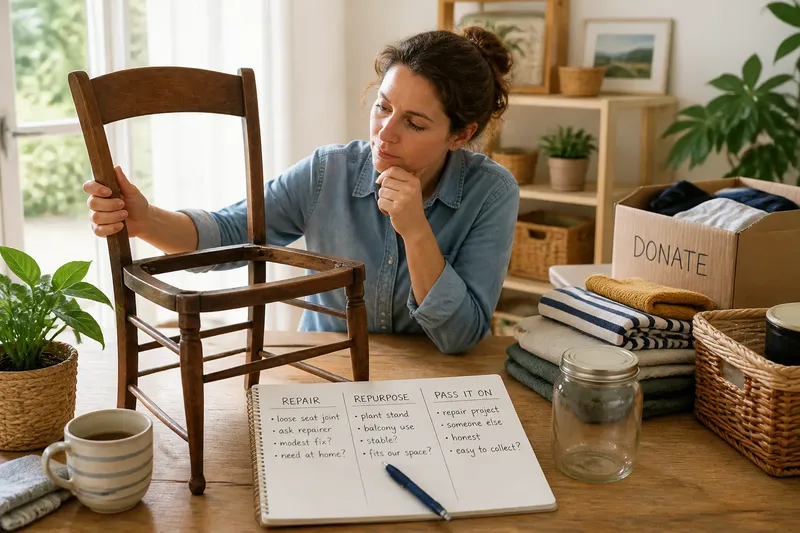
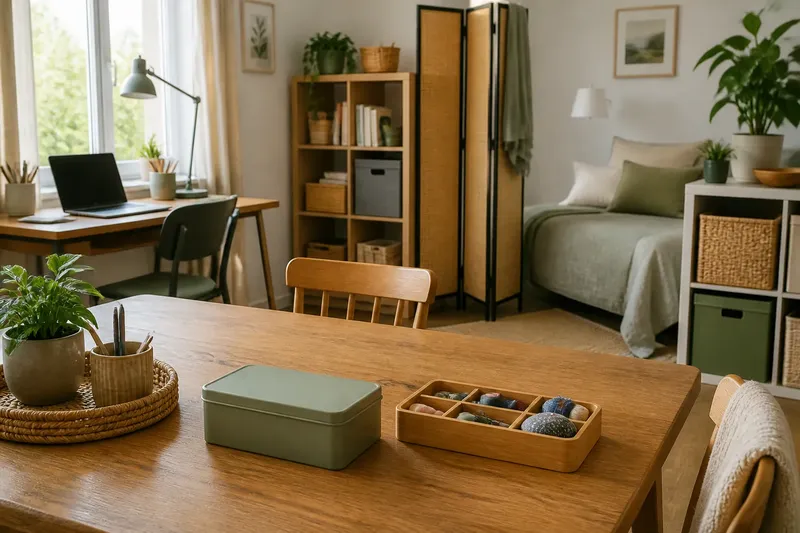
The Decluttering Myth: A Clear Surface Is Not the Whole Goal
The decluttering myth says fewer visible things mean a better room. Judge belongings by access and use to make daily tasks easier, not just surfaces emptier.
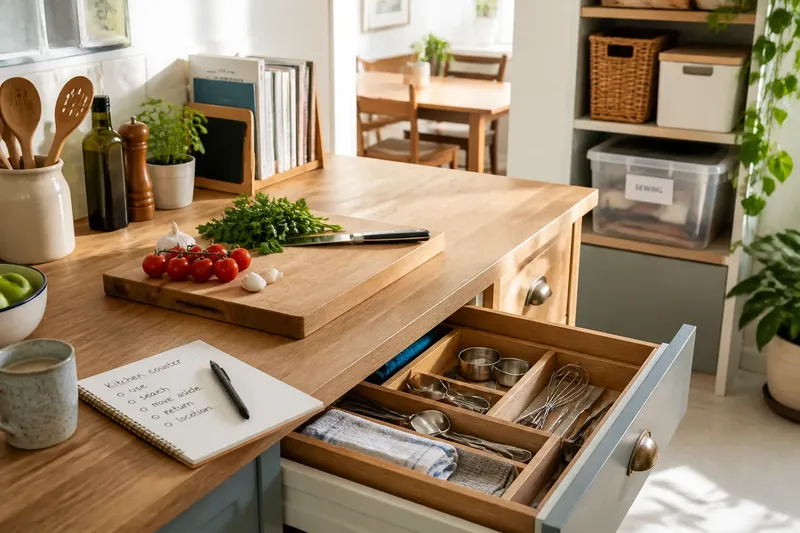
The most common decluttering mistake is treating every visible object as a problem; the cost is a room where useful things are harder to find and everyday tasks take more effort. The decluttering myth—that fewer visible belongings automatically make a room work better—confuses an empty surface with an effective space. A clear table can be pleasant, but the better test is whether the things you need are easy to find, handle and put away.
Try judging possessions by access and purpose rather than by how much of them you can see. This is not a campaign to keep everything out. It is a way to decide which objects belong in a particular spot, which need a different home and which no longer serve you.
Notice repeated use
Choose one defined spot, such as the kitchen drawer where you keep cooking tools or the shelf beside your desk. For several ordinary days, make a brief note whenever you take something out, search for it or move it aside to do a task.
- If you use an item during a regular task, then keep it in the spot or store it close by; otherwise, consider a less prominent home.
- If you repeatedly shift an object to use the surface beneath it, then move it elsewhere; otherwise, leave it where it is and keep observing.
- If you search for an item more than once, then give it a clear, reachable home; otherwise, its current location may be working.
- If an object is only needed for a particular occasion, then store it with related occasional items; otherwise, decide whether it belongs in the everyday zone.
- If a container makes its contents hard to identify, then label it or choose a more visible one; otherwise, keep the container and check whether it remains easy to use.
- If an item has no current role and no meaningful occasional purpose, then consider passing it on or disposing of it responsibly; otherwise, choose storage that suits its role.
Keep the notes specific. “The post tray blocks the lamp when I read” points to a particular decision; “the room feels cluttered” does not.
Separate access from visibility
Access is more than seeing an object. A notebook may be visible but awkward to lift from beneath heavier books, while a spare charger in a labelled drawer can be easy to retrieve without being on display.
Consider the whole action, including putting things away. A sewing kit used at the dining table needs a sensible return place, so needles and thread do not linger across the surface after the task.
Give an item a nearby home if it is occasional but still useful; reserve the easiest access for the things that support regular activities.
Choose a useful location
For each possession in the chosen spot, decide whether it belongs within reach, nearby, elsewhere or outside the home. This is a decision about location and purpose, not a demand that everything earn its place through frequent use.
- Within reach: tools used often for the spot’s main activity.
- Nearby: occasional essentials in an accessible drawer, cupboard or container.
- Elsewhere: belongings with a valid use but a more suitable home in another room.
- Leaving: items you no longer need or want, passed on or disposed of through an appropriate route.
Say you have a hypothetical kitchen counter occupied by a stack of recipe books. You use one book while cooking, consult the others occasionally and need the counter for chopping; move the stack to an accessible shelf, keep the favourite close by, then notice whether cooking starts without shifting books and the other titles remain easy to retrieve. The trade-off is a less crowded work surface in exchange for taking an extra moment to fetch an occasional book.
Seasonal and sentimental possessions can have a legitimate role even when they are rarely used. Store them in a way that respects that role without obstructing the things you need more often.
Keep storage simple
Make one location change at a time. Put daily-use items near the task they support, group related supplies and choose containers whose contents you can identify without unpacking them.
A shallow tray can corral keys and post; a lidded tin can hold sewing notions; a shelf can keep cookbooks accessible. A deep basket may conceal small items, while an open tray can attract unrelated odds and ends, so match the container to what it must hold.
For belongings that move between activities, choose a return place that is easy to reach and easy to recognise. A clear label or a dedicated drawer can make that destination obvious without leaving every tool on display.
Answers about decluttering?
How do I know what belongs within reach?
Notice which objects you handle during regular tasks in that spot. Keep those close enough to use without moving unrelated items, and store occasional essentials somewhere accessible.
Should I keep something I rarely use?
Frequency is only one clue: an item may serve an important occasional need or carry personal meaning. Consider whether it has a suitable storage place and whether borrowing or replacing it would be difficult if you let it go.
What if a clear surface helps me concentrate?
Keep the working surface clear if that helps you focus, but place useful supplies in nearby storage. A simple return place makes it easier to clear the area without turning every task into a search.
When should I reconsider an item’s location?
Revisit the choice when you repeatedly search for the item, move it aside or find it left out after use. Those observations point to a location that may not suit the task, rather than proving that the possession itself is unnecessary.
Make a final decision
After changing a location, use the spot normally and notice what happens. If an item is still hard to retrieve, give it a more direct home; if it keeps obstructing a task, move it away from the work area or reconsider whether it belongs there.
Before a familiar activity, check whether its tools are available without a search. Afterwards, check whether each one has an obvious return place; if either part feels awkward, adjust the storage choice rather than judging the room by how bare it looks.
The decluttering myth is easiest to resist when you make decisions from the work a possession does. Keep the note brief: name the object, the task it supports and the location that lets you use and return it without fuss.