How to Make One Room Serve Several Purposes
Learn how to make one room serve several purposes with practical layout choices that protect useful surfaces, privacy and an easy reset between activities.
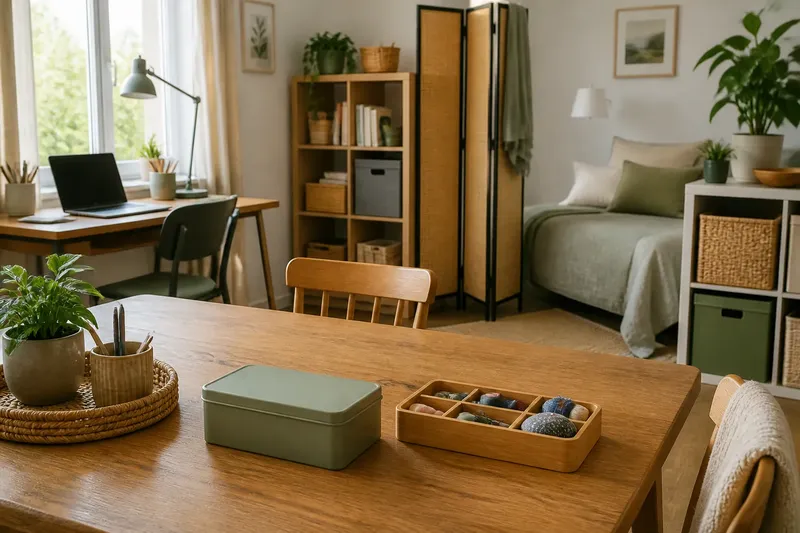
The common mistake with a multifunctional room is letting every activity claim the same surface indefinitely. The result is a table covered in work papers when it is time to eat, or a guest bed that cannot be used without shifting piles first. A room works better when its changing jobs have clear places and a simple way to switch.
Start with daily jobs
A room’s name is a convenient label, not a complete record of how it is used. A dining room might also host homework, mending or household paperwork; a bedroom may need to accommodate dressing, reading and quiet work.
Begin by noticing what people actually do there, which items need to stay within reach, and what gets in the way when the next activity begins. This is more useful than trying to make a room match an idealised floor plan.
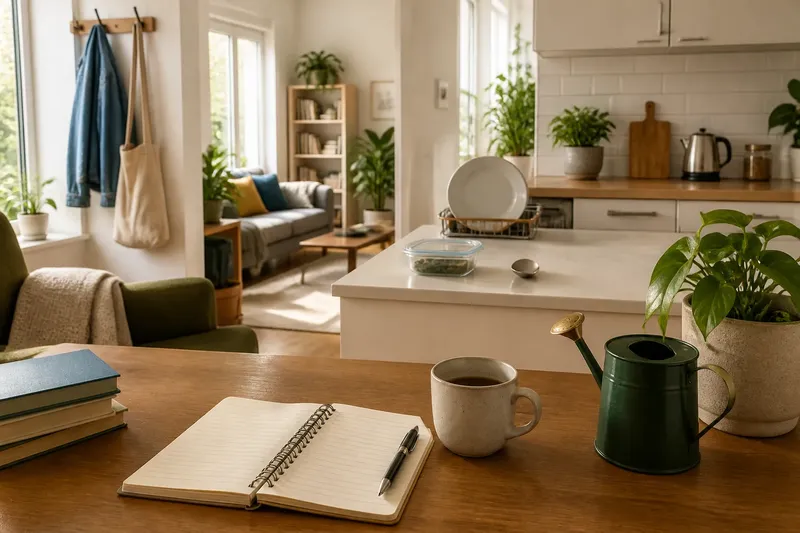
Say you share a small dining room that is used for meals, laptop work and sewing. You notice that the sewing tin and charger remain on the table after their tasks end, leaving little room for supper. If a nearby cupboard has a free shelf, place the tin and charger there after use; the observable result should be a clear table when it is time to eat. If the cupboard is already full, a lidded box on a reachable shelf is an alternative, though it will take a little longer to put away.
Give each activity a place
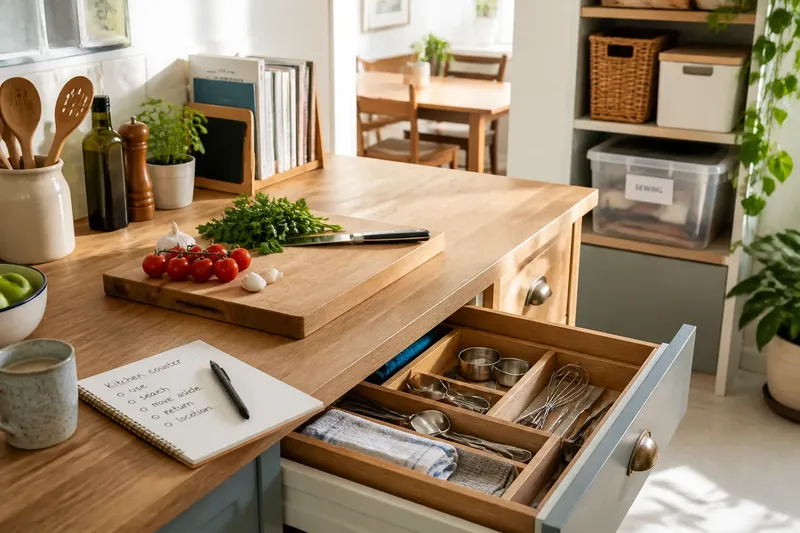
Not every use needs its own room, but each benefits from a reliable landing place. A desk organiser can hold pens and charging leads; a basket can gather knitting; a tray can corral post that needs attention.
Choose storage that fits the items and can be moved without a struggle. A folding screen may soften a visual boundary, while a desk lamp can make a work corner easier to distinguish from the rest of the room. These choices help separate activities without pretending that a wall has appeared.
- Observe: If papers spread across the dining table, move them to a labelled folder or document tray; if that storage is already full, sort the papers before adding another container.
- Observe: If a laptop cable crosses a walkway, route it along the wall with suitable cable clips; if that path still creates a trip risk, move the work surface closer to a socket.
- Observe: If sewing tools are mixed with everyday cutlery, keep them in a dedicated tin or pouch; if there is no safe storage spot, choose a higher cupboard shelf away from children.
- Observe: If a chair must be moved before the cupboard opens, reposition the chair; if the room has no clear alternative, store less-used items elsewhere.
- Observe: If glare makes the desk difficult to use, turn it away from direct window light or add a shade; if the corner remains uncomfortable, choose another surface.
- Observe: If a guest bed is blocked by storage, remove items that have another suitable home; if they must remain in the room, use a container that can be moved easily before guests arrive.
Keep transitions simple
A reset between activities should be short enough to happen in ordinary life. Put a few essentials together: a lidded box for work materials, a tray for small tools, or a folding table that can be stored behind a door when not in use.
Decide which activity takes priority when uses conflict. If a room is needed for sleeping, for instance, a work setup that prevents the bed from being used is not serving the household well; a fold-away desk or a different work location may be the better compromise.
Room planning questions?
How can I divide one room without building a wall?
Use furniture placement, a rug, a bookcase or a folding screen to suggest separate zones. Keep doorways, windows and walking routes clear, and choose a divider that can be moved if the room’s main use changes.
What furniture works best in a multifunctional room?
Choose pieces that can change position or purpose, such as a drop-leaf table, nesting tables or a sofa bed, if they suit the room and the people using it. Check that folded or rearranged furniture has a sensible place to go.
How do I keep a shared room tidy?
Give each activity a container or shelf and agree on where items return after use. If several people use the room, make the storage easy to identify rather than relying on one person to remember an invisible system.
Should a home office have its own room?
A separate room can help with focus and privacy, but it is not essential if a shared area has a workable surface and a clear end-of-work routine. Consider noise, confidential material and whether equipment can be safely put away.
Notice what keeps failing
If the same objects repeatedly land on the floor or table, the storage may be too far away, too awkward to use or too small for the task. Adjust the arrangement around that evidence rather than adding a more elaborate organising system.
For safety-sensitive needs, such as securing medicines, cleaning products or sharp tools, follow the product instructions and seek qualified advice where appropriate. A flexible room still needs clear routes and secure storage.
Make room for change
A room’s most useful arrangement can shift when someone starts working at home, a child needs a quiet place to read, or a visitor comes to stay. Keep the pieces that make those transitions easier and reconsider the ones that repeatedly obstruct them.
When searching for ways to make one room serve several purposes, focus on the objects that must move, the boundary that matters most and the storage that makes resetting easy. One well-placed box or a cleared surface can do more for daily use than a room label ever could.