Why a Small Cue Can Help a Habit Find Its Place
Small cues for habits can turn a vague intention into a clear next action. Compare everyday moments, visible objects and reminders to find a prompt that fits.

The common mistake with a small cue for a habit is asking memory to do all the work: remember to stretch, sort the post or water the windowsill plant at some point today. That vague promise can disappear among other tasks, leaving you feeling behind before you have begun. Link the action to a moment you already notice, and it has a clearer place in your day.
The useful question is not whether a cue is clever, but whether you naturally notice it and can change it when life shifts. Three options cover most routines: attach the action to an existing event, use a visible object or place, or set a reminder. Each suits a different obstacle.
Existing moments
An existing moment is an event you already encounter: putting the kettle on, hanging up your coat, feeding the cat or closing your laptop. The new action follows that event, so the cue lives inside your day rather than on a separate to-do list.
This approach suits an action that takes little preparation and fits reliably after a familiar activity. Make the link specific. “After breakfast” may be too broad if breakfast happens at different times and in different places; “after I put my mug by the sink” gives a clearer signal.
Say you want to prepare tomorrow’s lunch. After putting your dinner plate in the dishwasher, place a container and clean spoon on the counter. The observable result is a ready starting point for the next day, without requiring you to finish every lunch detail at once.
Choose a moment that already happens on the days you want the routine. If the cue depends on an occasional event, such as a weekly shop, it cannot prompt a daily action consistently.
Objects and places
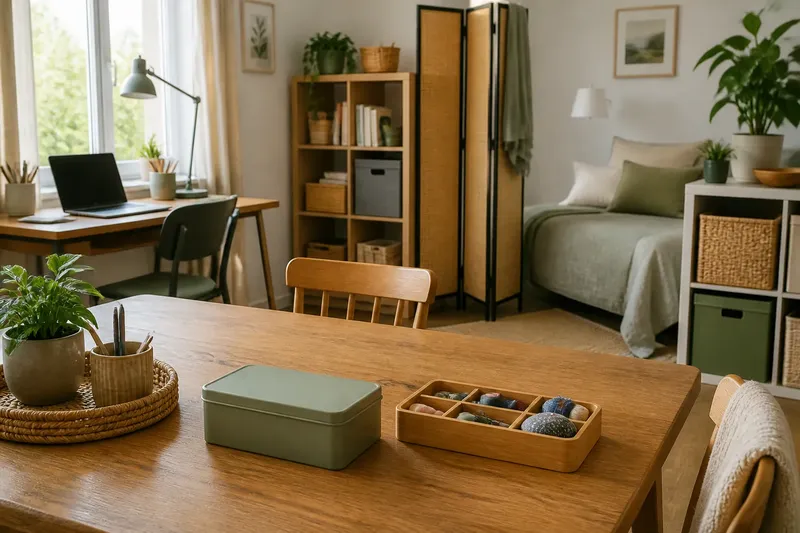
A physical cue uses an object, its position or a particular spot to bring an action to mind. A book beside your reading chair can prompt a few pages; a watering can near a plant can remind you to check its soil. The object need not be decorative. It needs to be noticeable without getting in the way.
This option suits routines involving a specific item or location, especially when a time-based signal would be easy to miss. It can also make starting easier: laying out a notebook gives journalling a visible starting point, while putting a reusable bag by the door makes it easier to take along.
There is a trade-off. A cue can fade into the background if it stays in the same place, and a misplaced object can stop prompting the action. Keep it where you are likely to see it at the right moment, without turning a walkway, work surface or shared room into a permanent reminder display.
Use an object cue when seeing the materials helps you start, not simply because an item is available to move.
Reminders and signals
A phone alert, calendar note or timer can supply a cue when an action belongs at a particular time or needs to happen away from home. This suits someone with a changing sequence of activities, or a routine with no dependable link to a household event.
Digital prompts are easy to revise, but they can become part of the general noise of notifications. Keep the wording direct: “Put the library book in your bag” gives you a clear action, while “be more organised” leaves the decision for later. If the prompt repeatedly arrives at an inconvenient moment, change its timing or remove it rather than accumulating alerts.
A reminder is a cue, not a commitment to interrupt everything. For an action that can wait, choose a signal you can snooze, reschedule or dismiss without turning a missed moment into a reason to abandon the habit.
Which cue fits your day?
What makes a cue reliable?
A useful cue is one you tend to notice before or when the action can happen. It should point to a clear next move, such as filling a water glass after lunch, rather than a broad intention that requires fresh planning.
What if my schedule changes?
Choose a cue tied to an event that travels with your routine, such as putting away your work things, rather than a fixed clock time. If that event changes too, shift the link to another familiar moment instead of preserving a cue that no longer fits.
How many routines should I link?
Start with one action and one cue. Once the link feels easy to notice, decide whether another small action belongs after it; piling tasks onto one moment can make the cue feel like a warning rather than an invitation.
When should I replace a cue?
Replace it when you stop noticing it, when the routine moves to a different part of the day, or when it creates friction. A cue is useful only while it points naturally towards an action you can take.
Keep the link adjustable
Make the cue easy to change from the outset. A reminder can be edited; a physical prompt can be moved; an event link can be reassigned. Household patterns change, and a different work schedule, shared kitchen or route through the house may make yesterday’s signal awkward.
When a cue stops working, change one part of the link rather than adding more prompts. You might move a notebook from a crowded table to the chair where you sit after dinner, or switch a stretching routine from “after waking” to “after changing out of work clothes”. Then notice whether the new signal is easier to catch.
Keep the action small enough to fit the cue. If “after I make tea” is meant to prompt a short tidy, choose one defined task, such as returning the scissors to their drawer, rather than an open-ended instruction to sort the whole room. A modest action is easier to attach to an ordinary moment and to move when that moment changes.
Choose by friction
Match the cue to the main obstacle. If you forget because the day has no clear trigger, attach the action to an existing moment. If you remember but struggle to begin, place the relevant object where the action happens. If timing matters or your routine moves between places, try a phone or calendar reminder.
For a routine that could use any of these, choose the least intrusive option you are likely to notice. Keep the link for a while, then ask: does this cue help me start, or has it become background clutter? If it is the latter, move or replace it.
A small cue for a habit should point towards a clear action, not demand a perfect schedule. If the signal becomes awkward, change the link rather than blaming yourself for missing it; the best prompt is one that still fits the day you actually have.